15 families · 8 weeks · campervans · Spain & Portugal.
A traveling village using the world as our classroom.

15 families · 8 weeks · campervans · Spain & Portugal.
A traveling village using the world as our classroom.

Why we are doing TV5

When we were planning the very first Traveling Village, we also did month-long camper trips just our family. After the first TV experience in Asia in 2024, we were absolutely sure that a Traveling Village in campervans would be amazing.

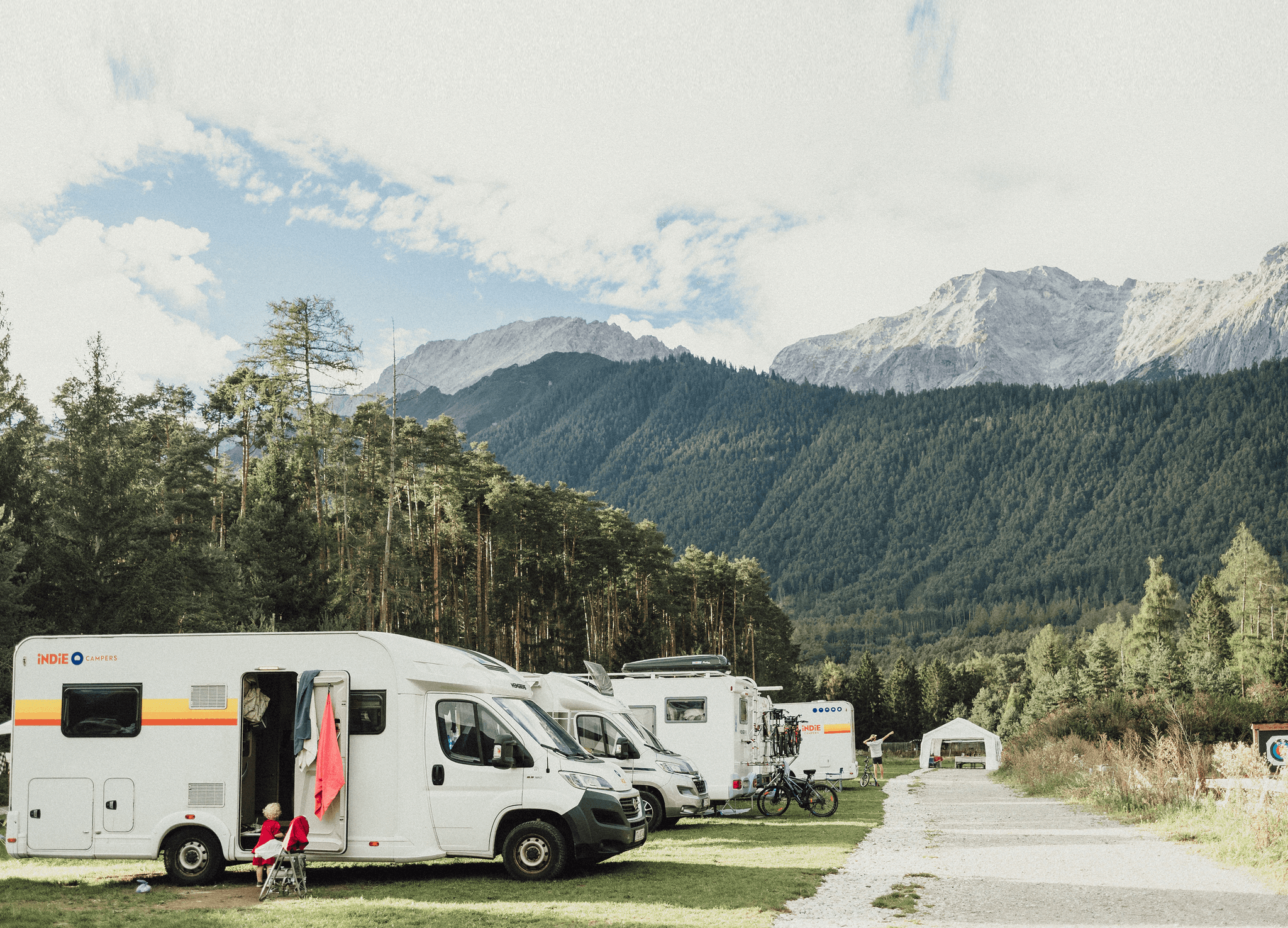
In 2025 we planned the first TV Campervan. For 6 weeks we were a full driving village traveling from Austria to Croatia. The experience was just as we hoped, and we knew right away that we would do it again.

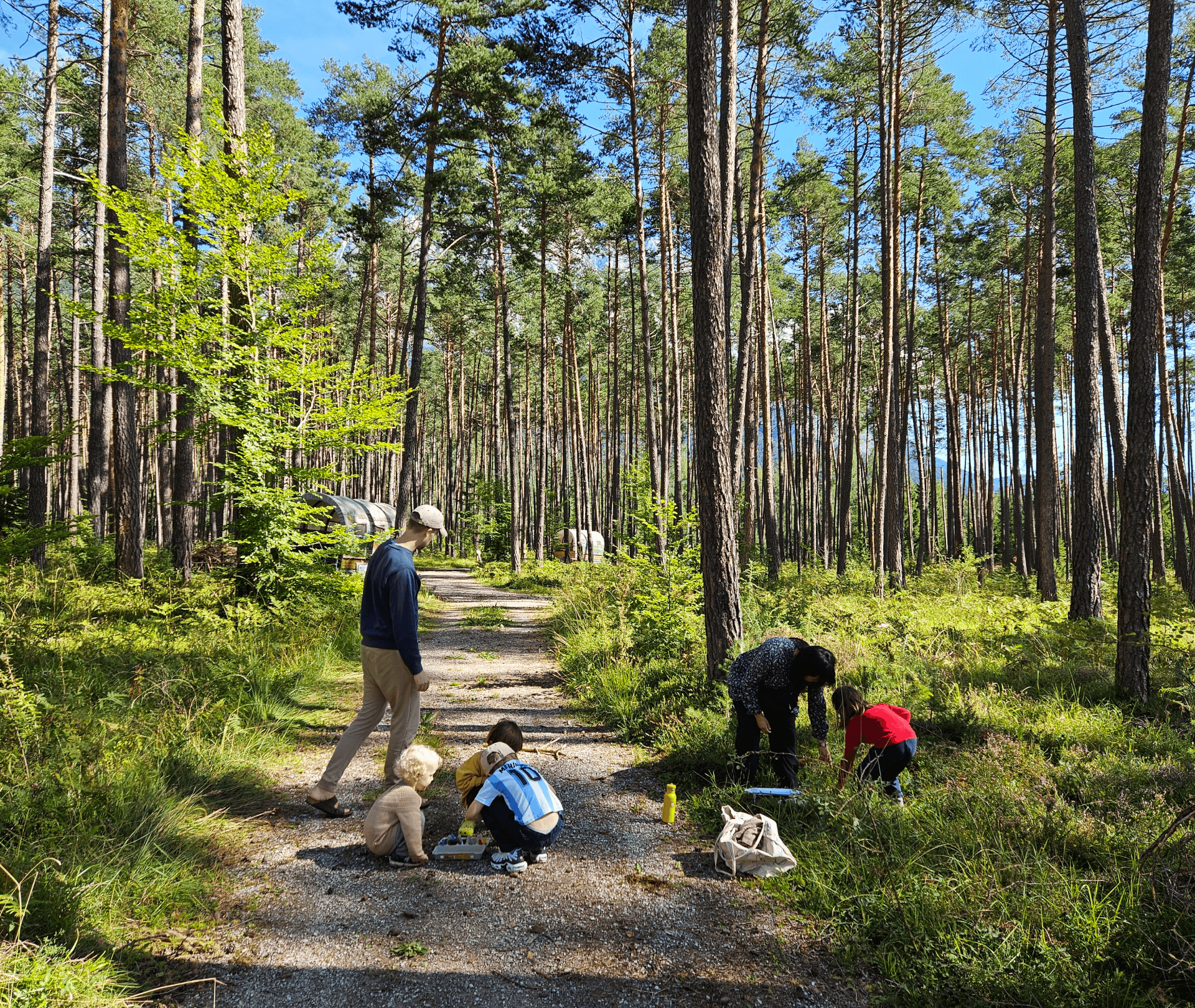
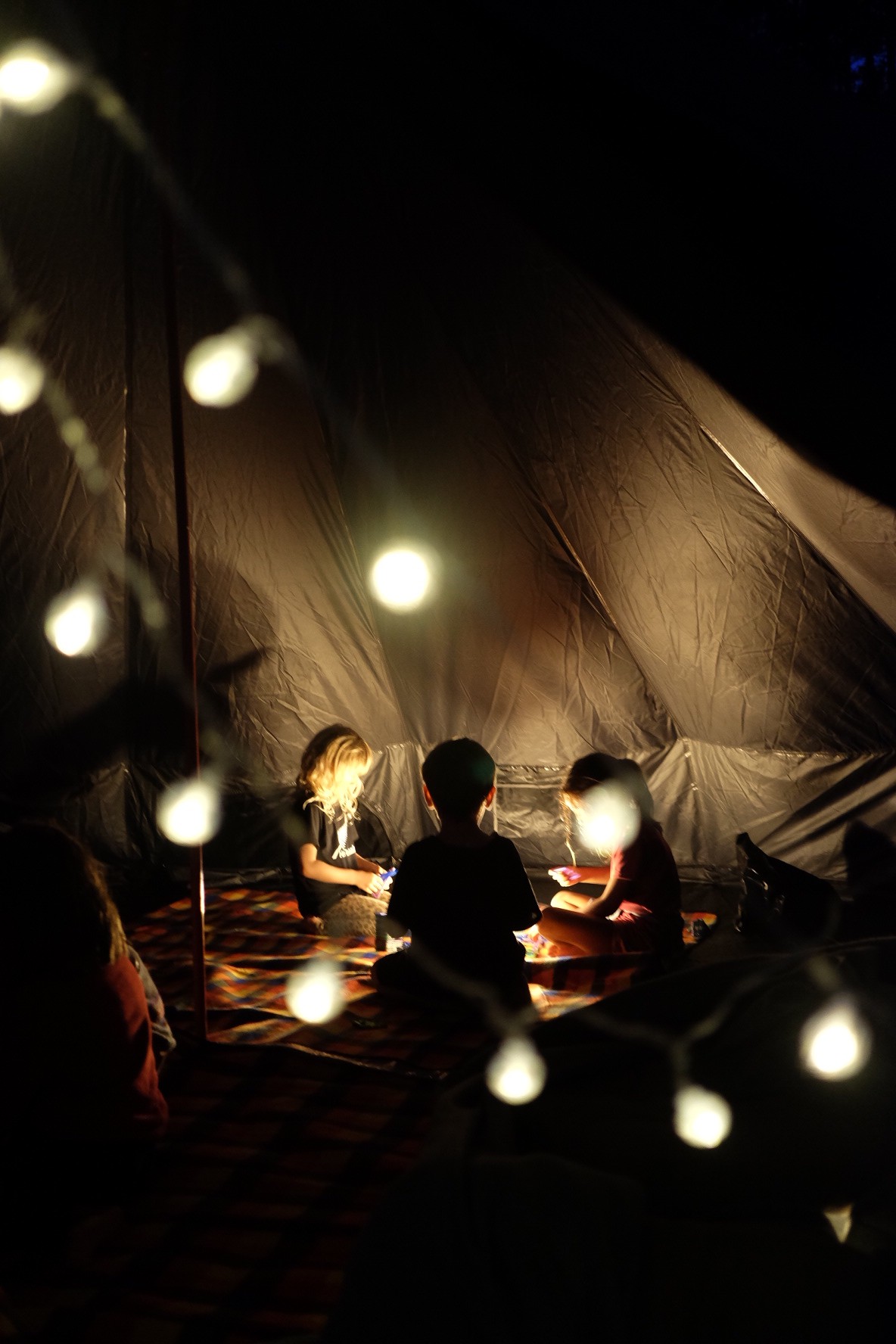
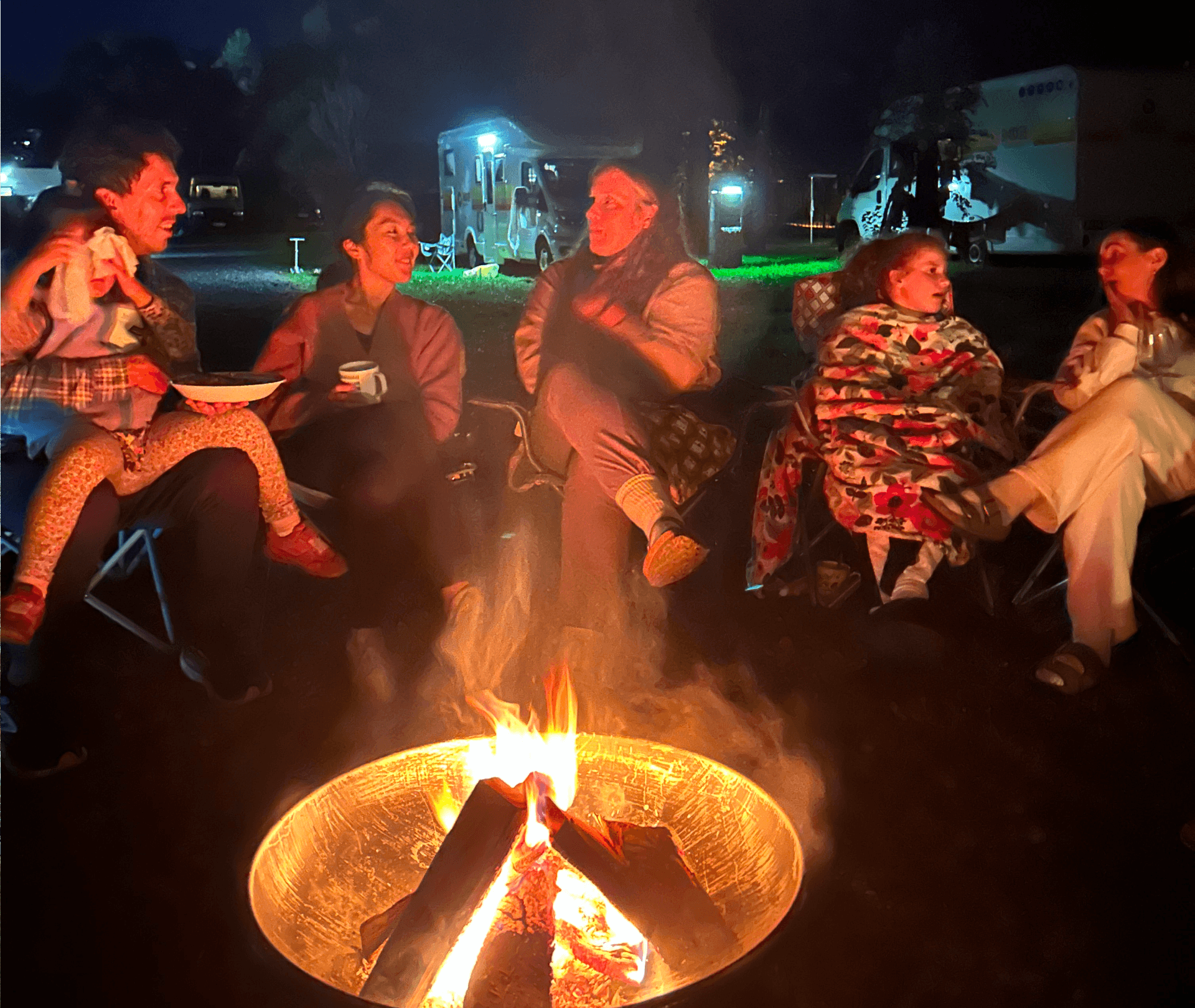
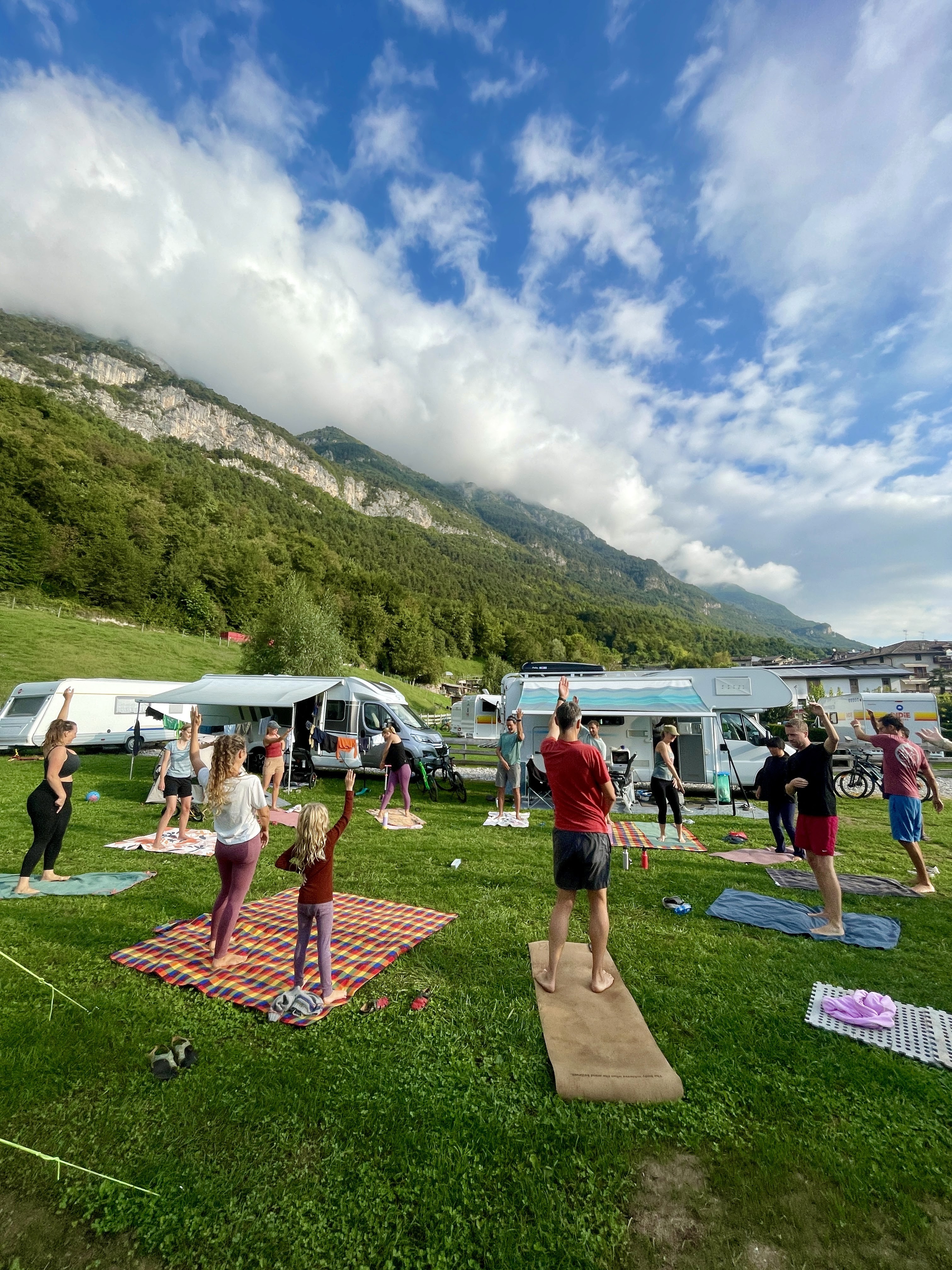
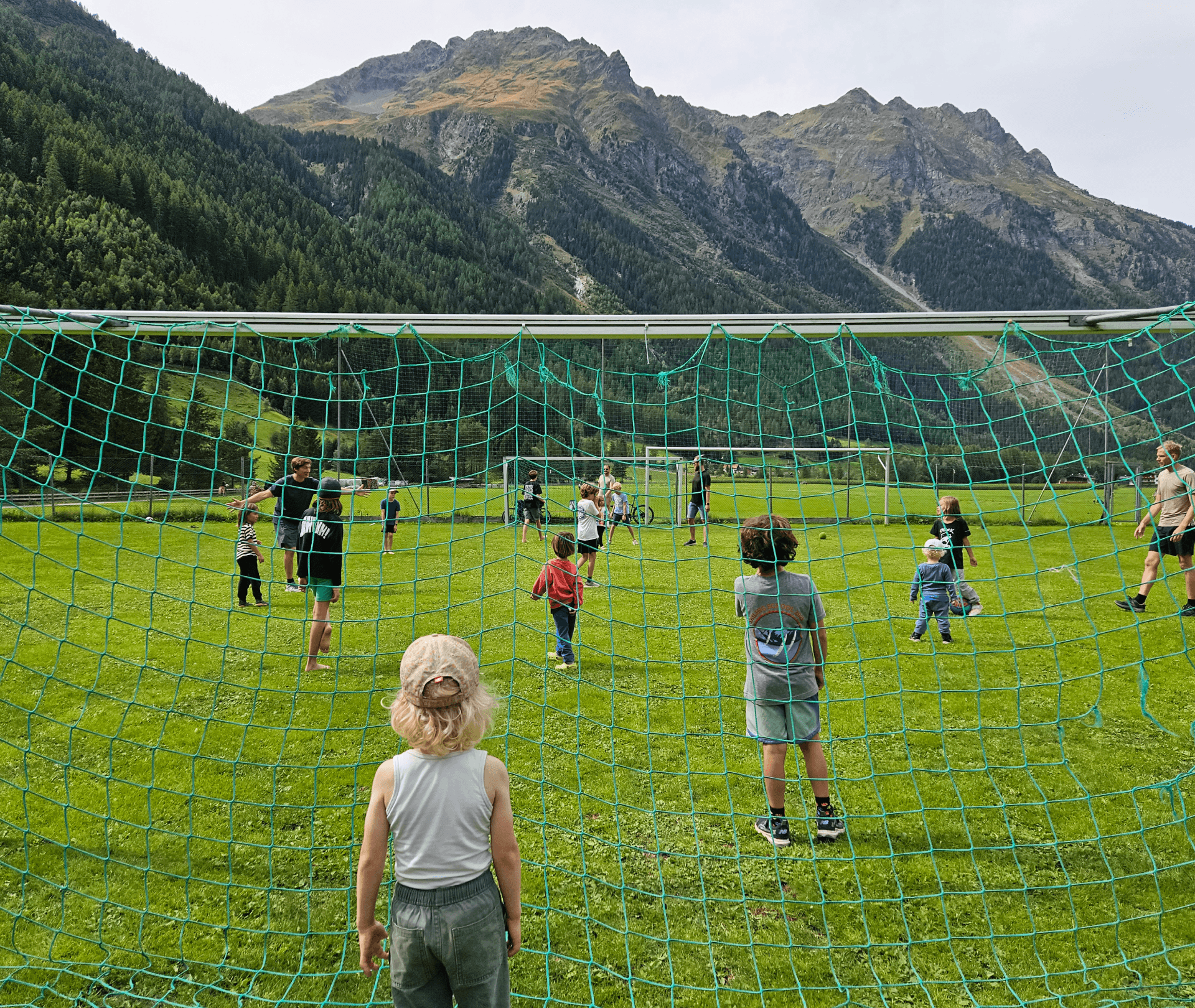
Some of the things that worked really well were that the kids were always just outside, but still had their safe base to retreat to. We also had a great shared camp, a huge tent with tables and benches plus a big tent for the kids to play in. We loved always being able to walk over to the community tent and hang out. It also made things easier for the parents, because after the kids were asleep, it was simple to spend time together in the tent or around the fire.

TV is an experiment and we are always trying new things, so there are plenty of things we want to improve for this version. We go into more detail further down this page, but it includes choosing two countries instead of four, making the trip a bit longer, improving our community camp setup, and aiming to spend more time in real nature and less time at fancy, expensive campsites.

At its core, a camper trip like this is about keeping it simple. The best moments were the easy ones, time at camp, sitting around the fire, being in nature, doing sports together, and of course lots of free play for the kids. That is what we are optimizing for.

One of the things we really liked in TV2 was arriving at a campsite and quickly seeing a handful of people come together to set up the community camp. It created a strong feeling of community and shared purpose. We can’t wait for April 1st, meeting everyone and setting up the first camp.

On this page we have gathered everything. If you are curious, dig into it all. We can also recommend listening to earlier podcast episodes to get a feel for what TV is about. If you have any questions at all, please reach out.

Best wishes,
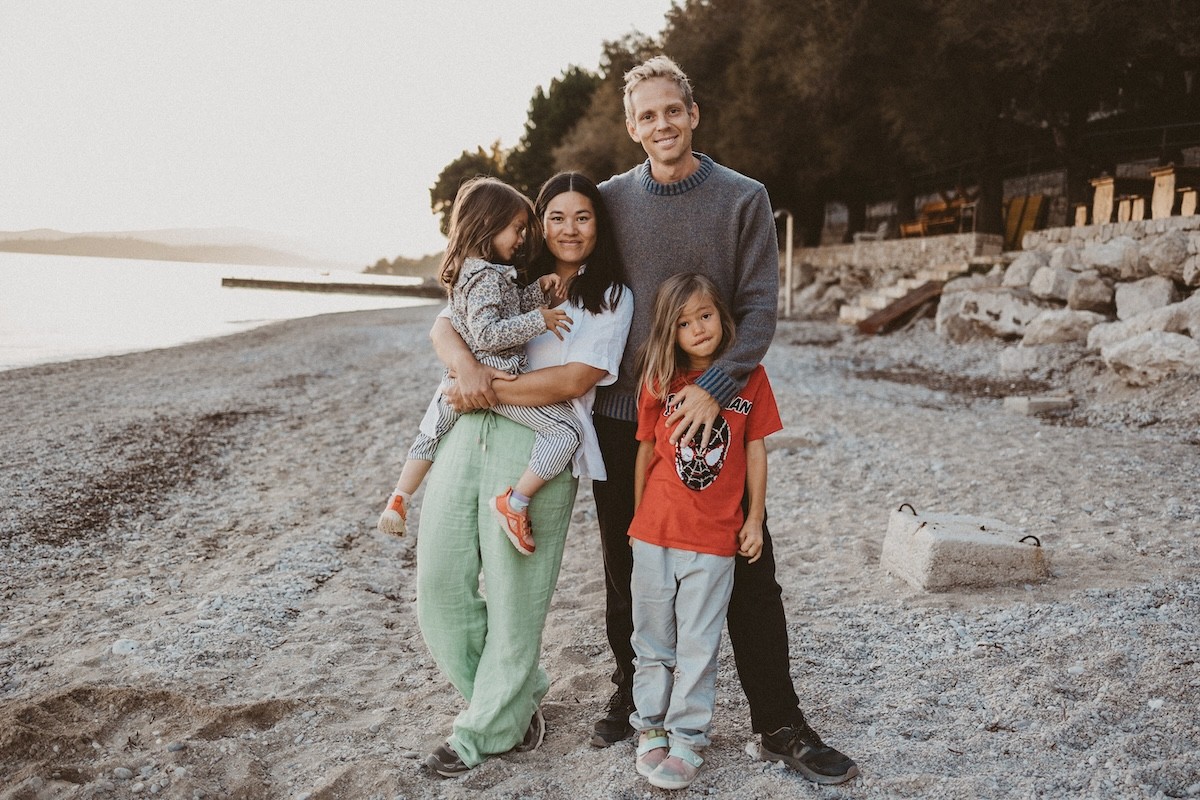
Iris, Kai, Michelle and Nikolaj
Locations

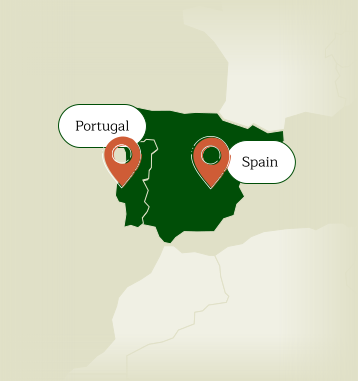
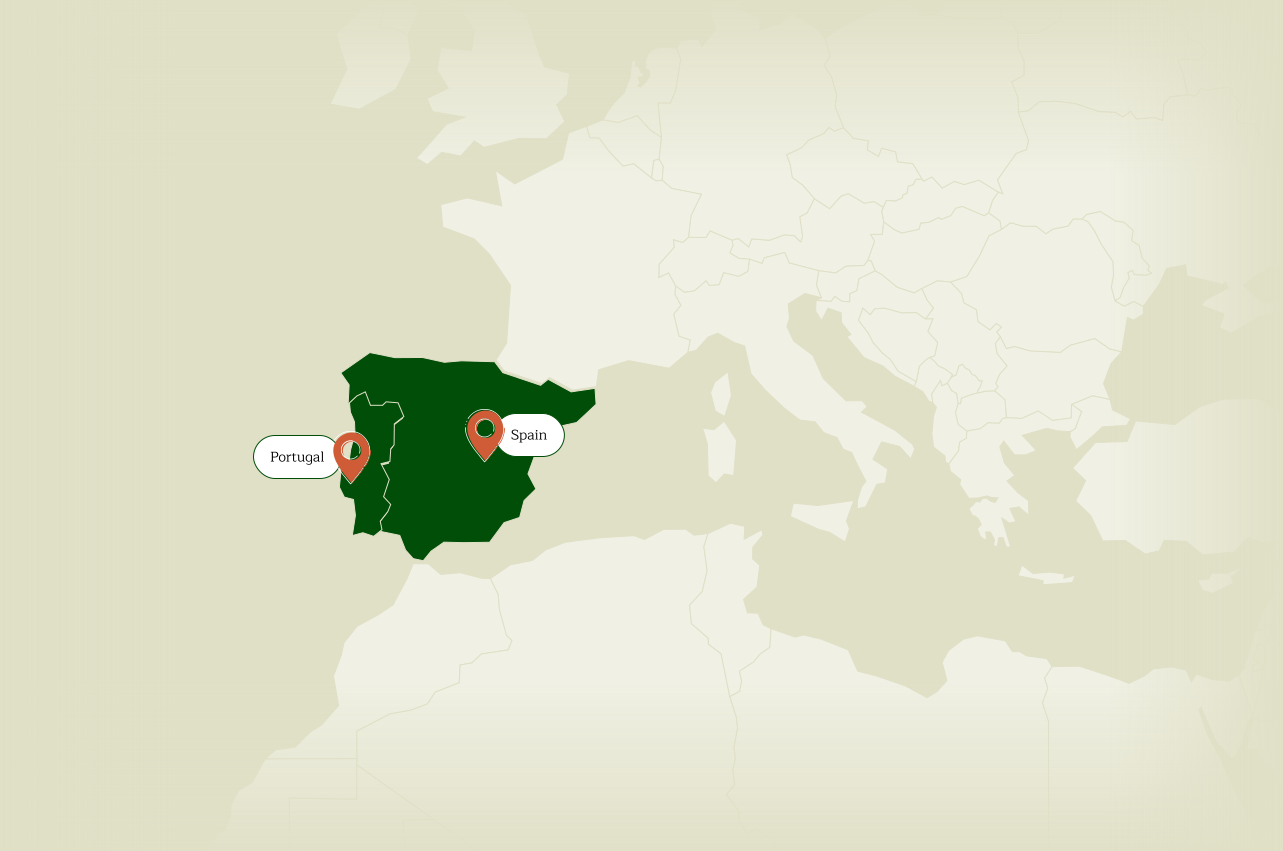
Over 8 weeks we will drive around Portugal and Spain as a small village on the move. We will combine campsites with raw nature and visiting a few local projects.
8 weeks

8 weeks

We will start on April 15th in Spain

2 countries

2 countries

Portugal and Spain are waiting

18 families

18 families

A small village on the move

Breaks

Breaks

Built-in breaks and slow time

The community camp

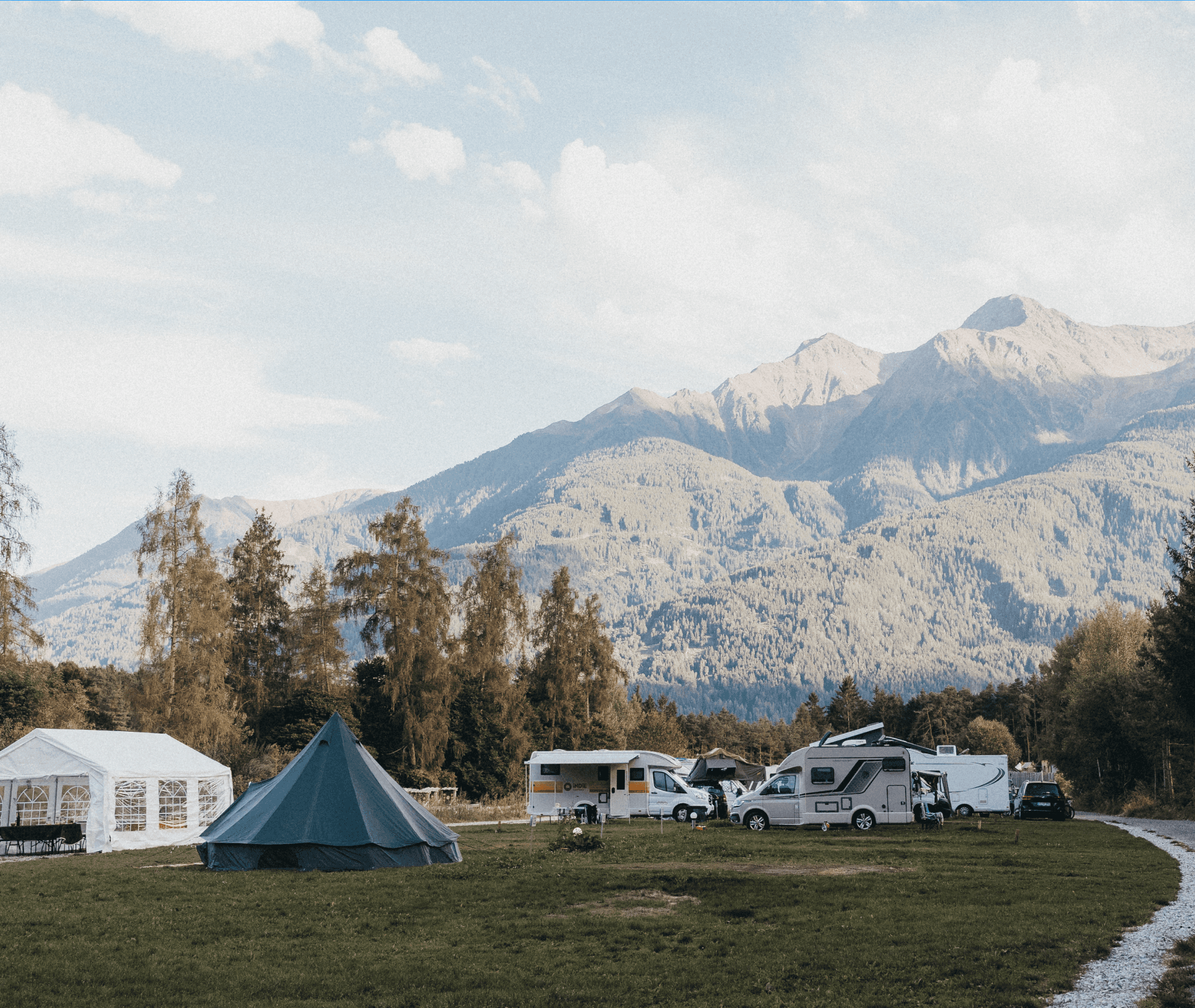
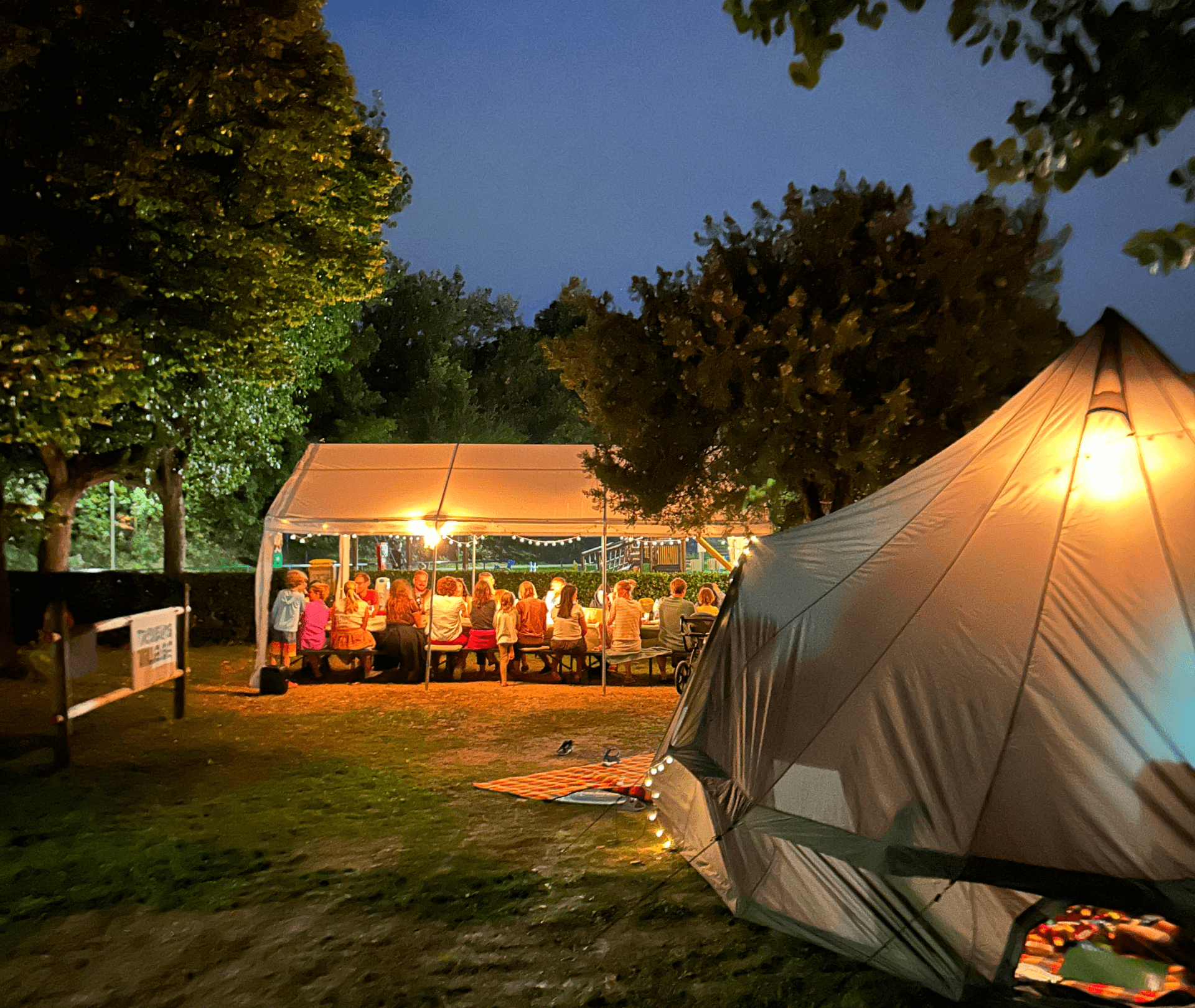
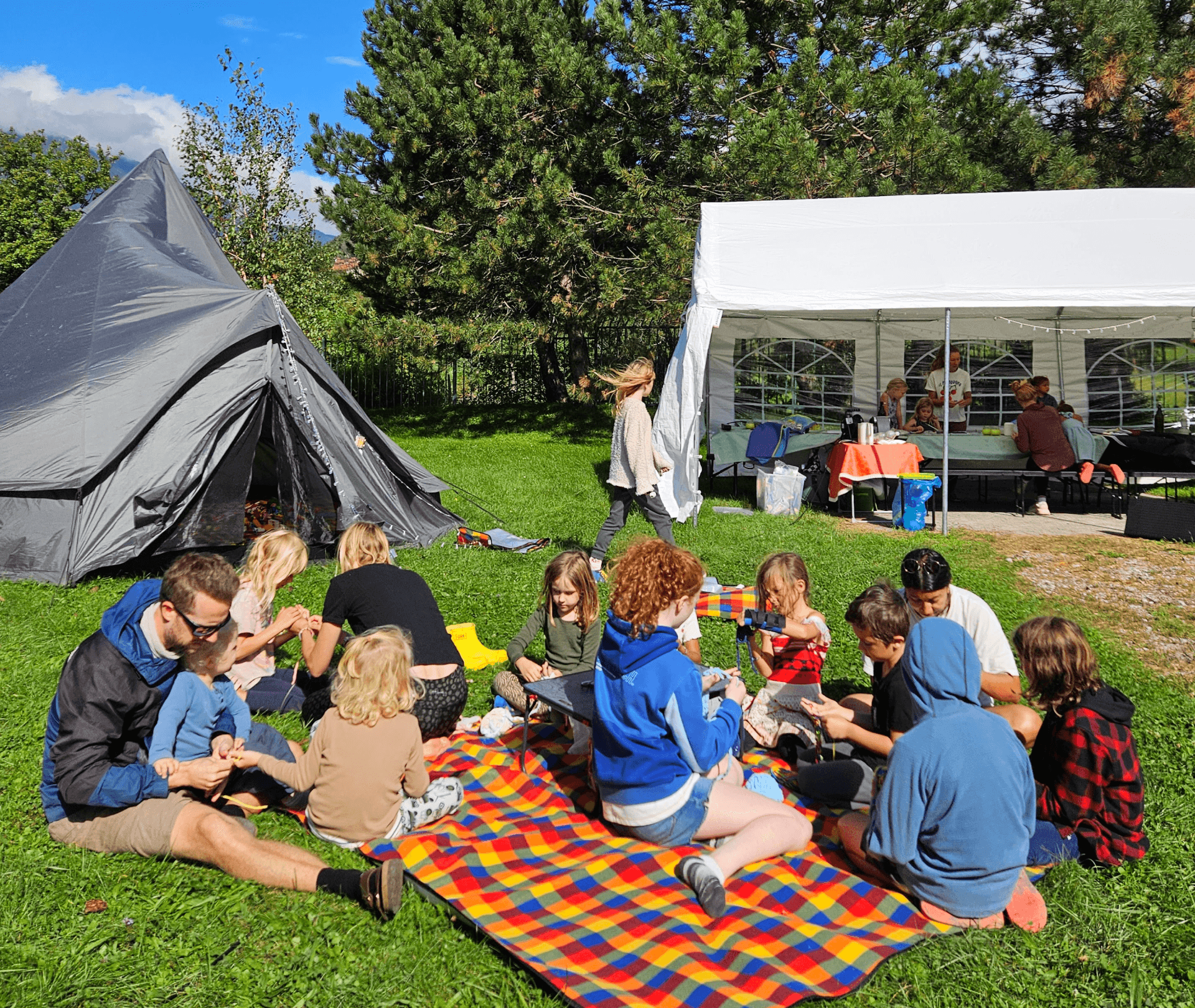
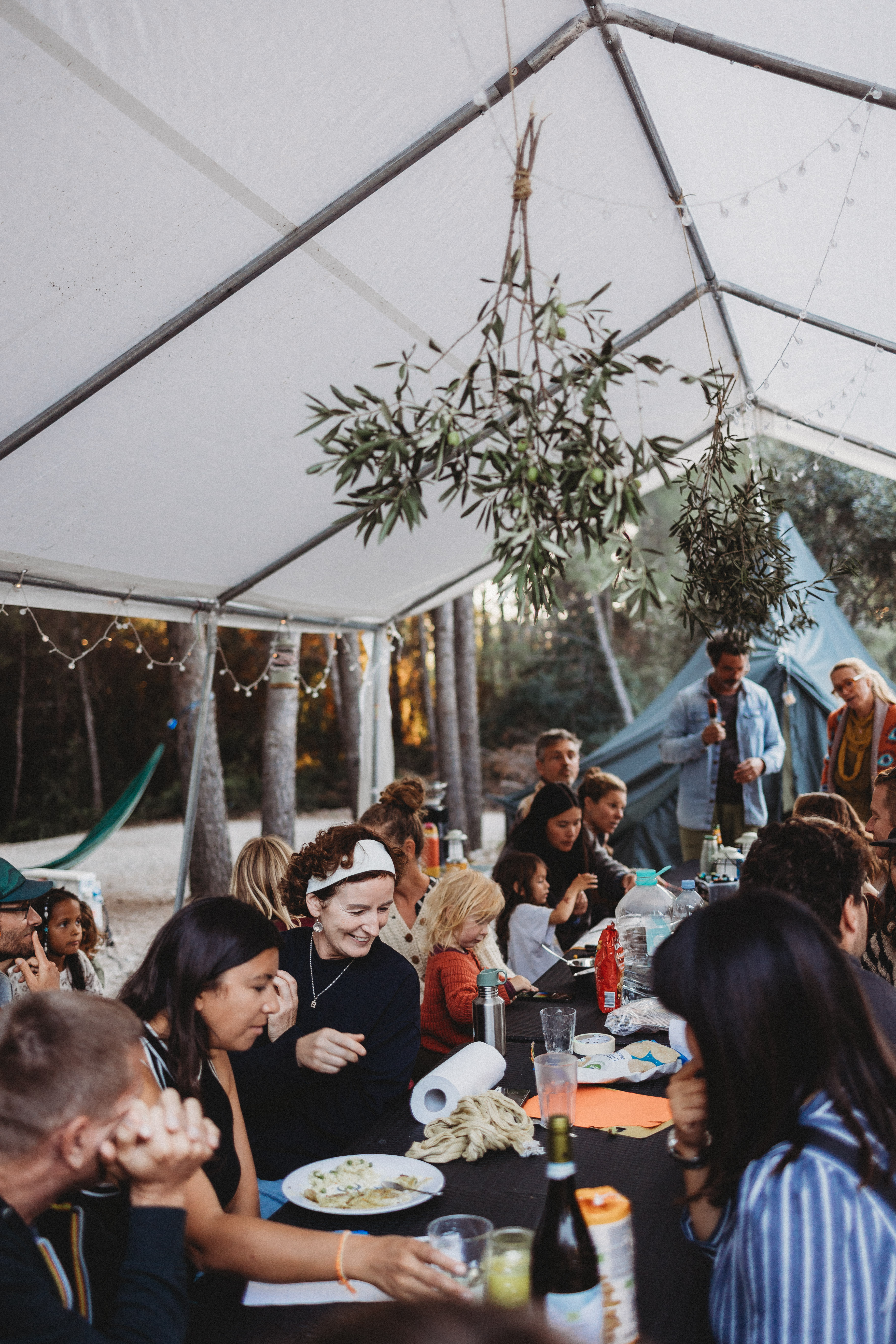
The community camp was the heart of the village in the last campervan version. We had a big pavilion with sides, tables and benches, plus a large tent where the kids could play. This time we are improving the setup to make it an even better place to hang out.

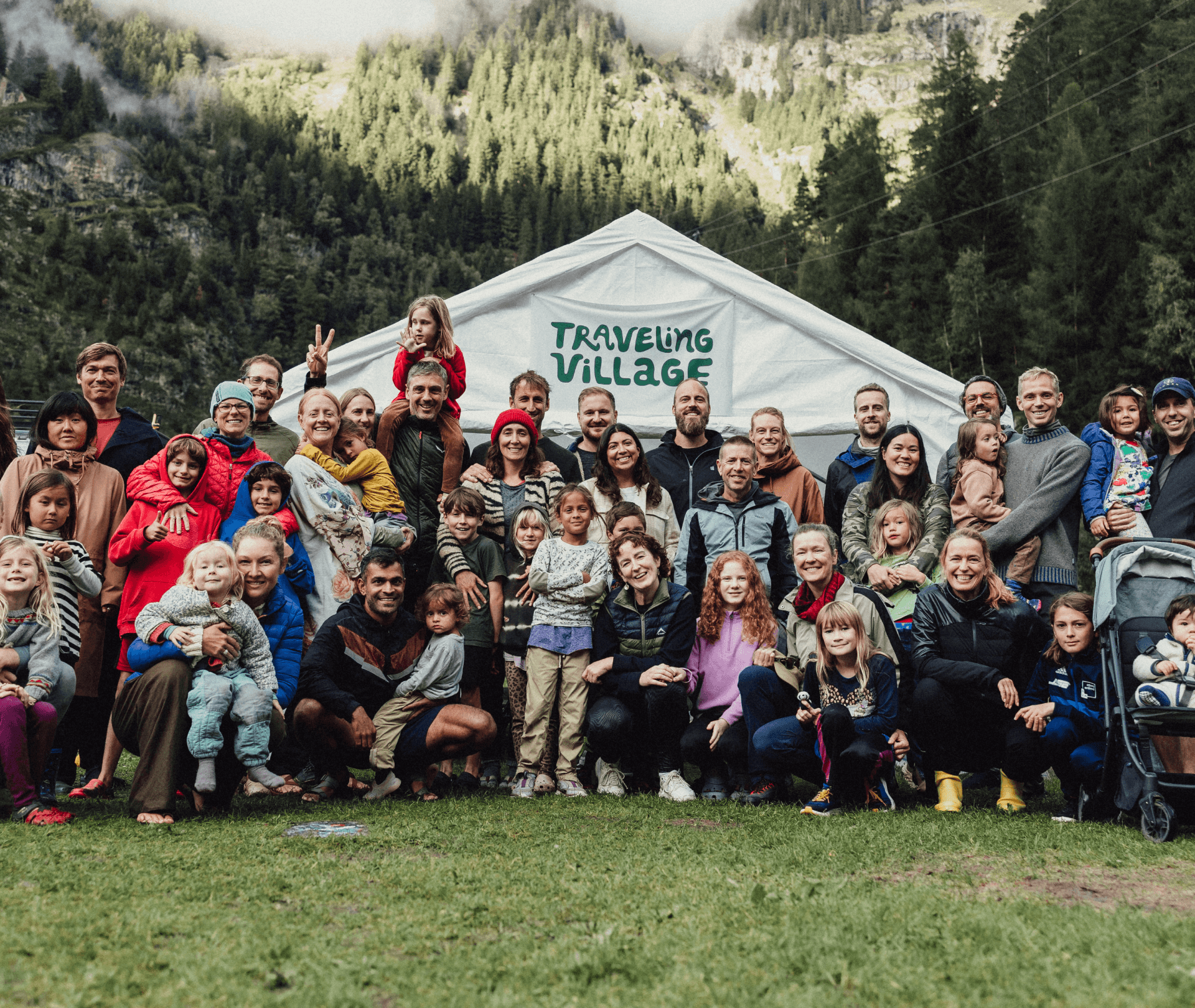
The shared camp will be a place for activities, for sitting and talking, and for meeting in the evenings when the kids are asleep. The photo you see here is from the community camp on TV2.

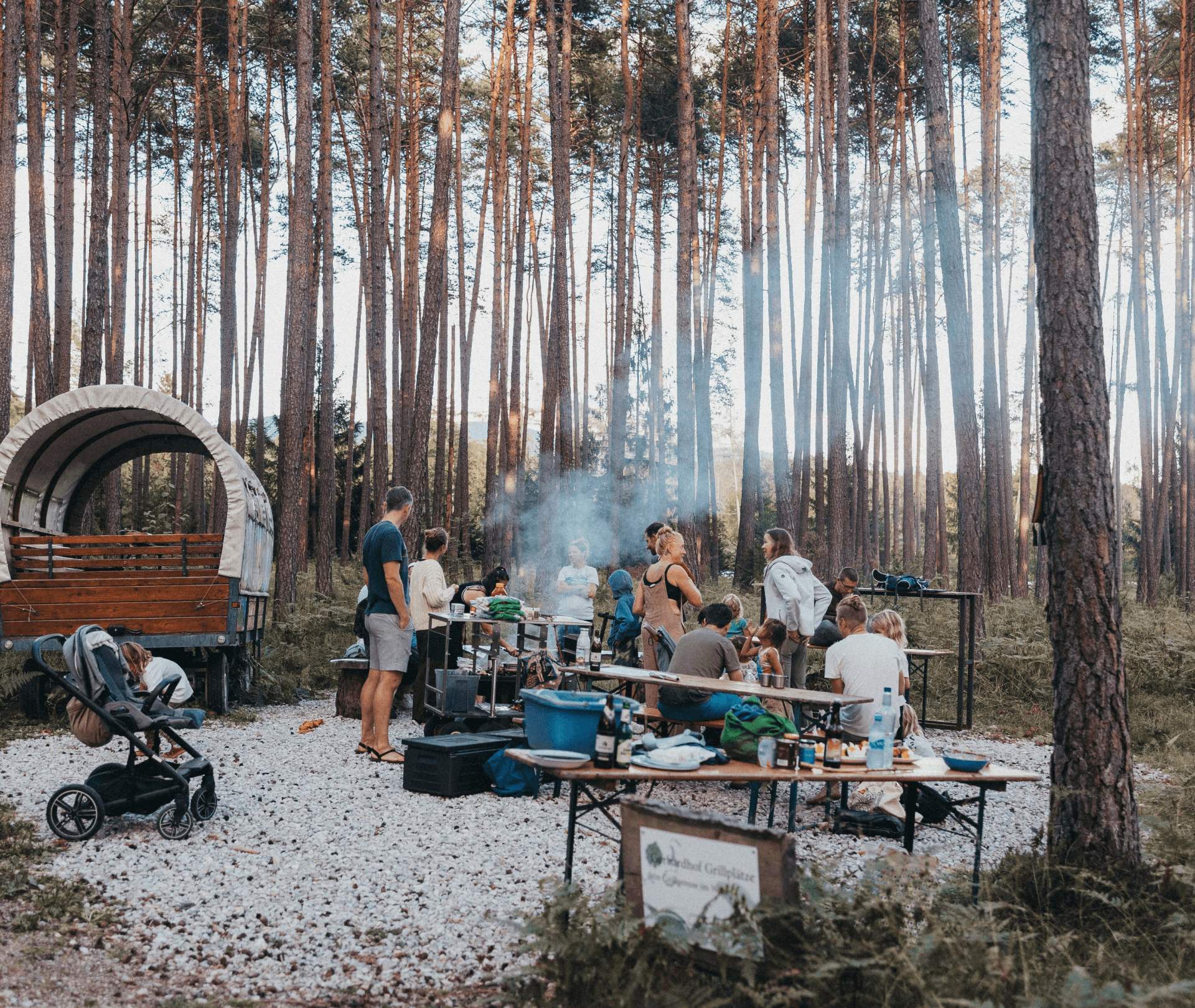
We are also improving a few other things, like bringing a big fire pit where it will be possible to cook. We will choose locations where fires are allowed, because sitting around the fire is something special, and cooking together makes it even better.

The community camp equipment will be bought and transported by TV, but it is up to the village to help set it up, take it down, and make it a great space. We will form a small workgroup to take care of that.
The structure

The structure

To make the community work we have developed a light structure. The structure helps everyone be on the same page and make sure we can all focus on all the fun stuff.

To make the community work we have developed a light structure. The structure helps everyone be on the same page and make sure we can all focus on all the fun stuff.

Workgroups

123

123

Workgroups

123

123

Village Meetings

Workgroups

Workgroups are a core part of how we run Traveling Village. From TV1, TV2 and TV3, we have seen how well this works in practice, and we are now building further on it for TV4 and TV5.

Workgroups are one of the main ways to get involved, take real responsibility and help shape the village. It is where things actually happen.

Each workgroup consists of 3 to 6 people. This makes it possible to involve a broad mix of families and make sure different needs and perspectives are represented in the work that gets done.

We highly recommend that each adult is part of a workgroup.

Each workgroup has a lead. The role of the lead is to be the proactive person who gets things started, collects information, and acts as the main point of contact for the rest of the village.

The community budget is split between workgroups, so most groups have their own budget and are responsible for decisions within their area.

We start with a set of workgroups we know work well, including infrastructure, lodging, communal meals, finance, events, activities, and emergency and conflict. From there, the village can create more workgroups based on what is needed.

One of the big benefits is that workgroups reduce friction. If something does not feel right, the best option is often to join the workgroup and help shape it. That tends to lead to better outcomes than discussing things from the outside.

We try to structure workgroups around what people are naturally interested in and good at. This creates more ownership and energy, but it is still a balance we are learning and improving each time.

Workgroups are also one of the easiest ways to connect with others in the village. By taking part, you become part of creating the experience, not just joining it.

Over time, we have seen how much this approach can unlock. Workgroups are a big part of what makes the village actually work.

Village Meetings

Workgroups

Workgroups are a core part of how we run Traveling Village. From TV1, TV2 and TV3, we have seen how well this works in practice, and we are now building further on it for TV4 and TV5.

Workgroups are one of the main ways to get involved, take real responsibility and help shape the village. It is where things actually happen.

Each workgroup consists of 3 to 6 people. This makes it possible to involve a broad mix of families and make sure different needs and perspectives are represented in the work that gets done.

We highly recommend that each adult is part of a workgroup.

Each workgroup has a lead. The role of the lead is to be the proactive person who gets things started, collects information, and acts as the main point of contact for the rest of the village.

The community budget is split between workgroups, so most groups have their own budget and are responsible for decisions within their area.

We start with a set of workgroups we know work well, including infrastructure, lodging, communal meals, finance, events, activities, and emergency and conflict. From there, the village can create more workgroups based on what is needed.

One of the big benefits is that workgroups reduce friction. If something does not feel right, the best option is often to join the workgroup and help shape it. That tends to lead to better outcomes than discussing things from the outside.

We try to structure workgroups around what people are naturally interested in and good at. This creates more ownership and energy, but it is still a balance we are learning and improving each time.

Workgroups are also one of the easiest ways to connect with others in the village. By taking part, you become part of creating the experience, not just joining it.

Over time, we have seen how much this approach can unlock. Workgroups are a big part of what makes the village actually work.

Communal meals

Workgroups

Workgroups are a core part of how we run Traveling Village. From TV1, TV2 and TV3, we have seen how well this works in practice, and we are now building further on it for TV4 and TV5.

Workgroups are one of the main ways to get involved, take real responsibility and help shape the village. It is where things actually happen.

Each workgroup consists of 3 to 6 people. This makes it possible to involve a broad mix of families and make sure different needs and perspectives are represented in the work that gets done.

We highly recommend that each adult is part of a workgroup.

Each workgroup has a lead. The role of the lead is to be the proactive person who gets things started, collects information, and acts as the main point of contact for the rest of the village.

The community budget is split between workgroups, so most groups have their own budget and are responsible for decisions within their area.

We start with a set of workgroups we know work well, including infrastructure, lodging, communal meals, finance, events, activities, and emergency and conflict. From there, the village can create more workgroups based on what is needed.

One of the big benefits is that workgroups reduce friction. If something does not feel right, the best option is often to join the workgroup and help shape it. That tends to lead to better outcomes than discussing things from the outside.

We try to structure workgroups around what people are naturally interested in and good at. This creates more ownership and energy, but it is still a balance we are learning and improving each time.

Workgroups are also one of the easiest ways to connect with others in the village. By taking part, you become part of creating the experience, not just joining it.

Over time, we have seen how much this approach can unlock. Workgroups are a big part of what makes the village actually work.

Communal meals

Workgroups

Workgroups are a core part of how we run Traveling Village. From TV1, TV2 and TV3, we have seen how well this works in practice, and we are now building further on it for TV4 and TV5.

Workgroups are one of the main ways to get involved, take real responsibility and help shape the village. It is where things actually happen.

Each workgroup consists of 3 to 6 people. This makes it possible to involve a broad mix of families and make sure different needs and perspectives are represented in the work that gets done.

We highly recommend that each adult is part of a workgroup.

Each workgroup has a lead. The role of the lead is to be the proactive person who gets things started, collects information, and acts as the main point of contact for the rest of the village.

The community budget is split between workgroups, so most groups have their own budget and are responsible for decisions within their area.

We start with a set of workgroups we know work well, including infrastructure, lodging, communal meals, finance, events, activities, and emergency and conflict. From there, the village can create more workgroups based on what is needed.

One of the big benefits is that workgroups reduce friction. If something does not feel right, the best option is often to join the workgroup and help shape it. That tends to lead to better outcomes than discussing things from the outside.

We try to structure workgroups around what people are naturally interested in and good at. This creates more ownership and energy, but it is still a balance we are learning and improving each time.

Workgroups are also one of the easiest ways to connect with others in the village. By taking part, you become part of creating the experience, not just joining it.

Over time, we have seen how much this approach can unlock. Workgroups are a big part of what makes the village actually work.

Handbook

Workgroups

Workgroups are a core part of how we run Traveling Village. From TV1, TV2 and TV3, we have seen how well this works in practice, and we are now building further on it for TV4 and TV5.

Workgroups are one of the main ways to get involved, take real responsibility and help shape the village. It is where things actually happen.

Each workgroup consists of 3 to 6 people. This makes it possible to involve a broad mix of families and make sure different needs and perspectives are represented in the work that gets done.

We highly recommend that each adult is part of a workgroup.

Each workgroup has a lead. The role of the lead is to be the proactive person who gets things started, collects information, and acts as the main point of contact for the rest of the village.

The community budget is split between workgroups, so most groups have their own budget and are responsible for decisions within their area.

We start with a set of workgroups we know work well, including infrastructure, lodging, communal meals, finance, events, activities, and emergency and conflict. From there, the village can create more workgroups based on what is needed.

One of the big benefits is that workgroups reduce friction. If something does not feel right, the best option is often to join the workgroup and help shape it. That tends to lead to better outcomes than discussing things from the outside.

We try to structure workgroups around what people are naturally interested in and good at. This creates more ownership and energy, but it is still a balance we are learning and improving each time.

Workgroups are also one of the easiest ways to connect with others in the village. By taking part, you become part of creating the experience, not just joining it.

Over time, we have seen how much this approach can unlock. Workgroups are a big part of what makes the village actually work.

Handbook

Workgroups

Workgroups are a core part of how we run Traveling Village. From TV1, TV2 and TV3, we have seen how well this works in practice, and we are now building further on it for TV4 and TV5.

Workgroups are one of the main ways to get involved, take real responsibility and help shape the village. It is where things actually happen.

Each workgroup consists of 3 to 6 people. This makes it possible to involve a broad mix of families and make sure different needs and perspectives are represented in the work that gets done.

We highly recommend that each adult is part of a workgroup.

Each workgroup has a lead. The role of the lead is to be the proactive person who gets things started, collects information, and acts as the main point of contact for the rest of the village.

The community budget is split between workgroups, so most groups have their own budget and are responsible for decisions within their area.

We start with a set of workgroups we know work well, including infrastructure, lodging, communal meals, finance, events, activities, and emergency and conflict. From there, the village can create more workgroups based on what is needed.

One of the big benefits is that workgroups reduce friction. If something does not feel right, the best option is often to join the workgroup and help shape it. That tends to lead to better outcomes than discussing things from the outside.

We try to structure workgroups around what people are naturally interested in and good at. This creates more ownership and energy, but it is still a balance we are learning and improving each time.

Workgroups are also one of the easiest ways to connect with others in the village. By taking part, you become part of creating the experience, not just joining it.

Over time, we have seen how much this approach can unlock. Workgroups are a big part of what makes the village actually work.

Digital townsquare

Workgroups

Workgroups are a core part of how we run Traveling Village. From TV1, TV2 and TV3, we have seen how well this works in practice, and we are now building further on it for TV4 and TV5.

Workgroups are one of the main ways to get involved, take real responsibility and help shape the village. It is where things actually happen.

Each workgroup consists of 3 to 6 people. This makes it possible to involve a broad mix of families and make sure different needs and perspectives are represented in the work that gets done.

We highly recommend that each adult is part of a workgroup.

Each workgroup has a lead. The role of the lead is to be the proactive person who gets things started, collects information, and acts as the main point of contact for the rest of the village.

The community budget is split between workgroups, so most groups have their own budget and are responsible for decisions within their area.

We start with a set of workgroups we know work well, including infrastructure, lodging, communal meals, finance, events, activities, and emergency and conflict. From there, the village can create more workgroups based on what is needed.

One of the big benefits is that workgroups reduce friction. If something does not feel right, the best option is often to join the workgroup and help shape it. That tends to lead to better outcomes than discussing things from the outside.

We try to structure workgroups around what people are naturally interested in and good at. This creates more ownership and energy, but it is still a balance we are learning and improving each time.

Workgroups are also one of the easiest ways to connect with others in the village. By taking part, you become part of creating the experience, not just joining it.

Over time, we have seen how much this approach can unlock. Workgroups are a big part of what makes the village actually work.

Digital townsquare

Workgroups

Workgroups are a core part of how we run Traveling Village. From TV1, TV2 and TV3, we have seen how well this works in practice, and we are now building further on it for TV4 and TV5.

Workgroups are one of the main ways to get involved, take real responsibility and help shape the village. It is where things actually happen.

Each workgroup consists of 3 to 6 people. This makes it possible to involve a broad mix of families and make sure different needs and perspectives are represented in the work that gets done.

We highly recommend that each adult is part of a workgroup.

Each workgroup has a lead. The role of the lead is to be the proactive person who gets things started, collects information, and acts as the main point of contact for the rest of the village.

The community budget is split between workgroups, so most groups have their own budget and are responsible for decisions within their area.

We start with a set of workgroups we know work well, including infrastructure, lodging, communal meals, finance, events, activities, and emergency and conflict. From there, the village can create more workgroups based on what is needed.

One of the big benefits is that workgroups reduce friction. If something does not feel right, the best option is often to join the workgroup and help shape it. That tends to lead to better outcomes than discussing things from the outside.

We try to structure workgroups around what people are naturally interested in and good at. This creates more ownership and energy, but it is still a balance we are learning and improving each time.

Workgroups are also one of the easiest ways to connect with others in the village. By taking part, you become part of creating the experience, not just joining it.

Over time, we have seen how much this approach can unlock. Workgroups are a big part of what makes the village actually work.

The ONE doc

Workgroups

Workgroups are a core part of how we run Traveling Village. From TV1, TV2 and TV3, we have seen how well this works in practice, and we are now building further on it for TV4 and TV5.

Workgroups are one of the main ways to get involved, take real responsibility and help shape the village. It is where things actually happen.

Each workgroup consists of 3 to 6 people. This makes it possible to involve a broad mix of families and make sure different needs and perspectives are represented in the work that gets done.

We highly recommend that each adult is part of a workgroup.

Each workgroup has a lead. The role of the lead is to be the proactive person who gets things started, collects information, and acts as the main point of contact for the rest of the village.

The community budget is split between workgroups, so most groups have their own budget and are responsible for decisions within their area.

We start with a set of workgroups we know work well, including infrastructure, lodging, communal meals, finance, events, activities, and emergency and conflict. From there, the village can create more workgroups based on what is needed.

One of the big benefits is that workgroups reduce friction. If something does not feel right, the best option is often to join the workgroup and help shape it. That tends to lead to better outcomes than discussing things from the outside.

We try to structure workgroups around what people are naturally interested in and good at. This creates more ownership and energy, but it is still a balance we are learning and improving each time.

Workgroups are also one of the easiest ways to connect with others in the village. By taking part, you become part of creating the experience, not just joining it.

Over time, we have seen how much this approach can unlock. Workgroups are a big part of what makes the village actually work.

The ONE doc

Workgroups

Workgroups are a core part of how we run Traveling Village. From TV1, TV2 and TV3, we have seen how well this works in practice, and we are now building further on it for TV4 and TV5.

Workgroups are one of the main ways to get involved, take real responsibility and help shape the village. It is where things actually happen.

Each workgroup consists of 3 to 6 people. This makes it possible to involve a broad mix of families and make sure different needs and perspectives are represented in the work that gets done.

We highly recommend that each adult is part of a workgroup.

Each workgroup has a lead. The role of the lead is to be the proactive person who gets things started, collects information, and acts as the main point of contact for the rest of the village.

The community budget is split between workgroups, so most groups have their own budget and are responsible for decisions within their area.

We start with a set of workgroups we know work well, including infrastructure, lodging, communal meals, finance, events, activities, and emergency and conflict. From there, the village can create more workgroups based on what is needed.

One of the big benefits is that workgroups reduce friction. If something does not feel right, the best option is often to join the workgroup and help shape it. That tends to lead to better outcomes than discussing things from the outside.

We try to structure workgroups around what people are naturally interested in and good at. This creates more ownership and energy, but it is still a balance we are learning and improving each time.

Workgroups are also one of the easiest ways to connect with others in the village. By taking part, you become part of creating the experience, not just joining it.

Over time, we have seen how much this approach can unlock. Workgroups are a big part of what makes the village actually work.

Impressions from the last campervan TV
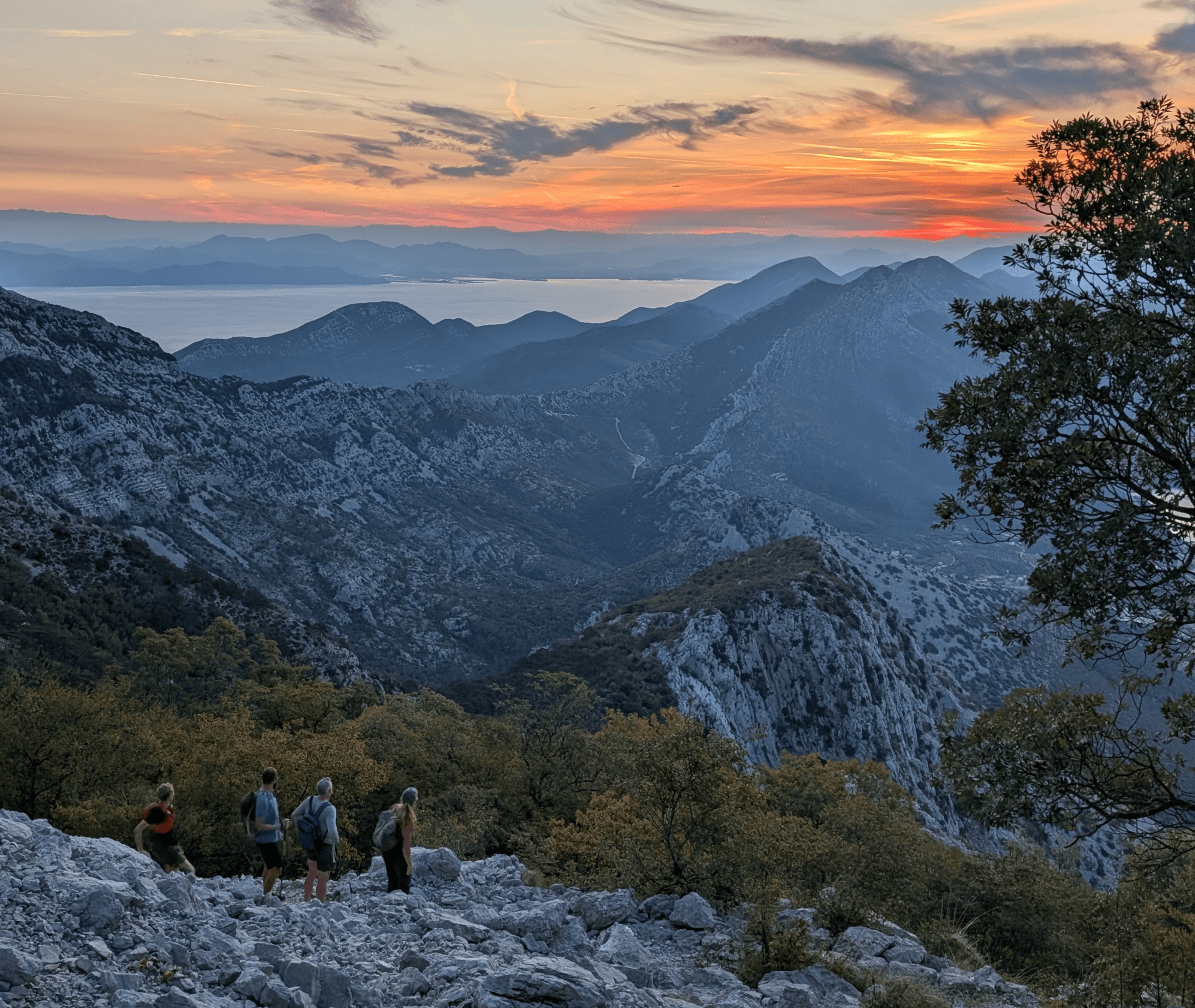
What we’re dreaming about for TV5

Traveling Village is always an experiment and we are always changing things, improving and trying new things out. Here are some of the things we are focusing on for TV4, especially based on the experience of TV2 (also a campervan version)

A slower pace and rhythm: We will implement a few village breaks of 1-2 nights and also try having some quiet hours in camp.

Much real nature: We don't need a lot of fancy campsite facilities, but access to nature and lot of free space, so the kids can run around is our priority.

A much better community camp: The community camp is the heart of the village and while we had a great camp in TV2, we know how it can be improved.

More bonfires: Some of the most memorable moments of TV2 was meeting around the fire in the evening. We want to have a much better firepit and prioritize campsites where bonfires are allowed.

Connecting locally: On TV2 our pace was too fast, making it difficult to truly connect. We are slowing down, but also aiming to establish at least two partnerships with local projects.

Creating a unique TV4 artwork: We want to find a local artists, who can visit us, create workshops and create a unique TV4 artwork that all families will get as a poster.

Easier to cook together: We will create a setup, so it's easy to cook over the fire and prepare food together.

What is Traveling Village really like?

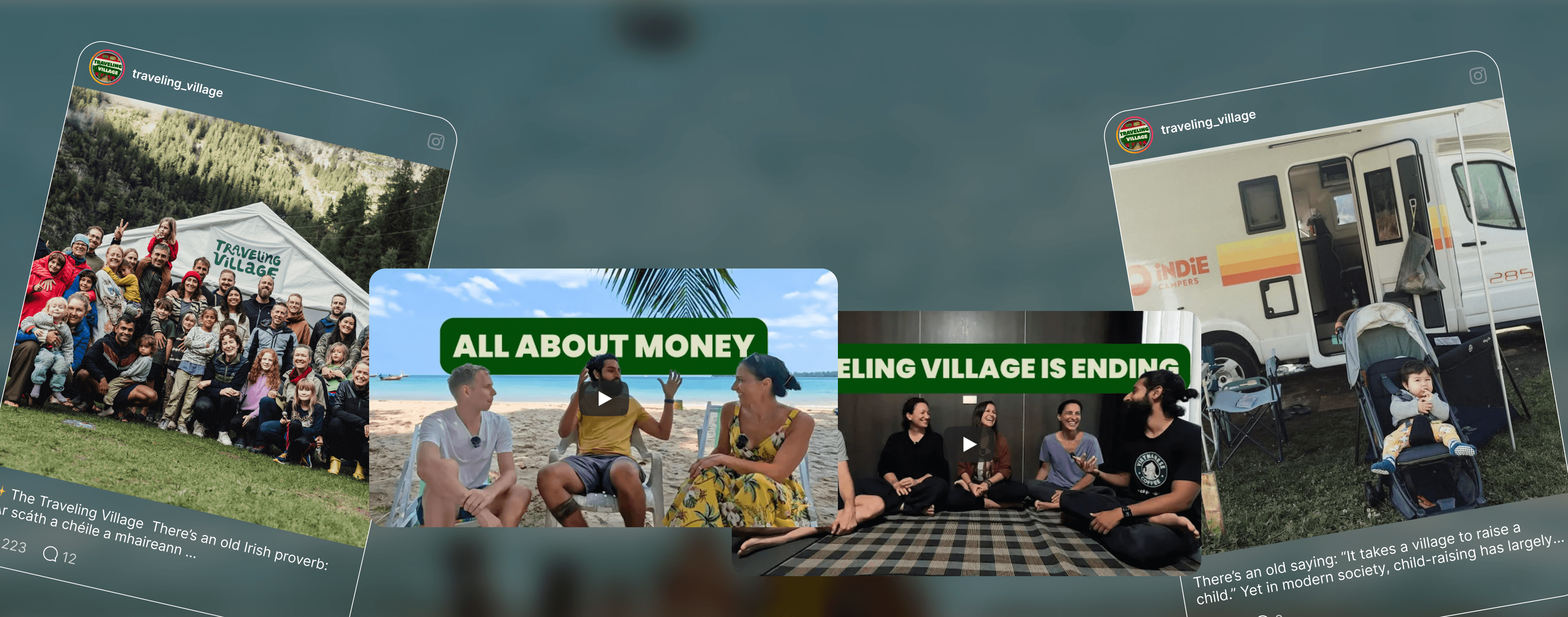
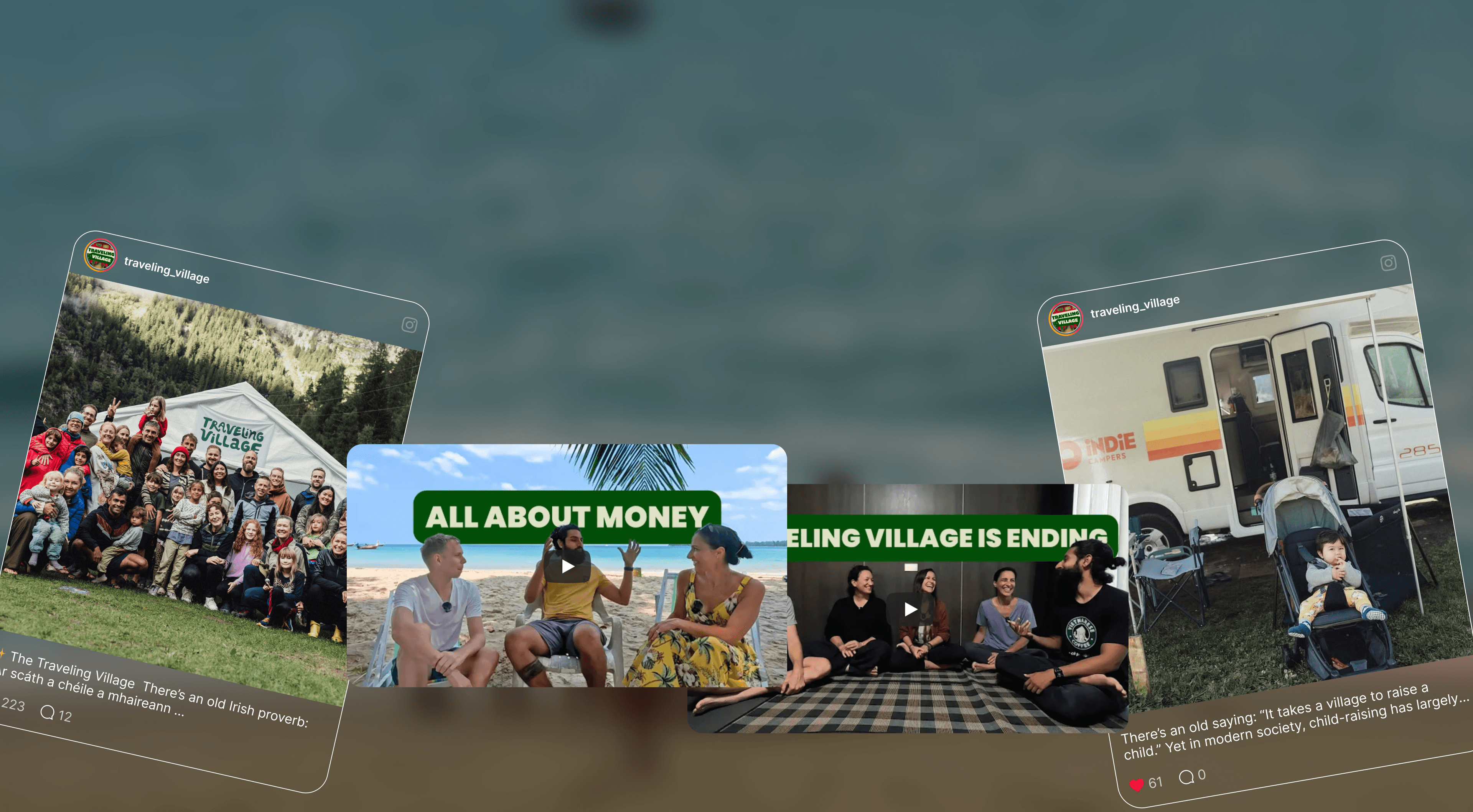
Our goal has always been that TV is an experiment and that we want to be transparent about both ups and downs. That's how we learn! Both during TV1 and TV3 we have recorded podcasts and we also share how TV life is really like on Instagram.
Understanding the Costs
of Traveling Village

We do money as transparent as possible, seperating money into a fee for TV and a community fund that the community runs together. Here is how it works:

$1,600
$1,600
$240 per adult
$120 per child (2-14)
$240 per adult
$120 per child (2-14)
Personal costs
Personal costs
Sign-up fee
Sign-up fee
Community Fund contribution
Camper, food, insurance, campsites, personal expenses

This fee goes to TV, helping make it sustainable. It also funds the community camp, its transport, and the local artist.

This fee goes to TV, helping make it sustainable. It also funds the community camp, its transport, and the local artist.

This amount is a shared budget we have to make the village even more amazing. Funds will be split out to workgroups who then decide how it's spent.

This amount is a shared budget we have to make the village even more amazing. Funds will be split out to workgroups who then decide how it's spent.

Each family covers their own personal costs. This keeps things flexible for each family to decide how they want to travel.

Each family covers their own personal costs. This keeps things flexible for each family to decide how they want to travel.

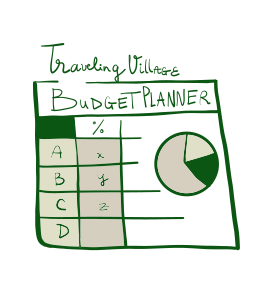
By structuring it this way, we ensure a fair, transparent system that balances personal responsibility with community-driven contributions. If you want to understand each of these better, click the below boxes for an in-depth description. We also made a budget planner, so you can calculate the total cost of your trip.

Sign up fee

Workgroups

Workgroups are a core part of how we run Traveling Village. From TV1, TV2 and TV3, we have seen how well this works in practice, and we are now building further on it for TV4 and TV5.

Workgroups are one of the main ways to get involved, take real responsibility and help shape the village. It is where things actually happen.

Each workgroup consists of 3 to 6 people. This makes it possible to involve a broad mix of families and make sure different needs and perspectives are represented in the work that gets done.

We highly recommend that each adult is part of a workgroup.

Each workgroup has a lead. The role of the lead is to be the proactive person who gets things started, collects information, and acts as the main point of contact for the rest of the village.

The community budget is split between workgroups, so most groups have their own budget and are responsible for decisions within their area.

We start with a set of workgroups we know work well, including infrastructure, lodging, communal meals, finance, events, activities, and emergency and conflict. From there, the village can create more workgroups based on what is needed.

One of the big benefits is that workgroups reduce friction. If something does not feel right, the best option is often to join the workgroup and help shape it. That tends to lead to better outcomes than discussing things from the outside.

We try to structure workgroups around what people are naturally interested in and good at. This creates more ownership and energy, but it is still a balance we are learning and improving each time.

Workgroups are also one of the easiest ways to connect with others in the village. By taking part, you become part of creating the experience, not just joining it.

Over time, we have seen how much this approach can unlock. Workgroups are a big part of what makes the village actually work.

Communal funds

Workgroups

Workgroups are a core part of how we run Traveling Village. From TV1, TV2 and TV3, we have seen how well this works in practice, and we are now building further on it for TV4 and TV5.

Workgroups are one of the main ways to get involved, take real responsibility and help shape the village. It is where things actually happen.

Each workgroup consists of 3 to 6 people. This makes it possible to involve a broad mix of families and make sure different needs and perspectives are represented in the work that gets done.

We highly recommend that each adult is part of a workgroup.

Each workgroup has a lead. The role of the lead is to be the proactive person who gets things started, collects information, and acts as the main point of contact for the rest of the village.

The community budget is split between workgroups, so most groups have their own budget and are responsible for decisions within their area.

We start with a set of workgroups we know work well, including infrastructure, lodging, communal meals, finance, events, activities, and emergency and conflict. From there, the village can create more workgroups based on what is needed.

One of the big benefits is that workgroups reduce friction. If something does not feel right, the best option is often to join the workgroup and help shape it. That tends to lead to better outcomes than discussing things from the outside.

We try to structure workgroups around what people are naturally interested in and good at. This creates more ownership and energy, but it is still a balance we are learning and improving each time.

Workgroups are also one of the easiest ways to connect with others in the village. By taking part, you become part of creating the experience, not just joining it.

Over time, we have seen how much this approach can unlock. Workgroups are a big part of what makes the village actually work.

Communal funds

Workgroups

Workgroups are a core part of how we run Traveling Village. From TV1, TV2 and TV3, we have seen how well this works in practice, and we are now building further on it for TV4 and TV5.

Workgroups are one of the main ways to get involved, take real responsibility and help shape the village. It is where things actually happen.

Each workgroup consists of 3 to 6 people. This makes it possible to involve a broad mix of families and make sure different needs and perspectives are represented in the work that gets done.

We highly recommend that each adult is part of a workgroup.

Each workgroup has a lead. The role of the lead is to be the proactive person who gets things started, collects information, and acts as the main point of contact for the rest of the village.

The community budget is split between workgroups, so most groups have their own budget and are responsible for decisions within their area.

We start with a set of workgroups we know work well, including infrastructure, lodging, communal meals, finance, events, activities, and emergency and conflict. From there, the village can create more workgroups based on what is needed.

One of the big benefits is that workgroups reduce friction. If something does not feel right, the best option is often to join the workgroup and help shape it. That tends to lead to better outcomes than discussing things from the outside.

We try to structure workgroups around what people are naturally interested in and good at. This creates more ownership and energy, but it is still a balance we are learning and improving each time.

Workgroups are also one of the easiest ways to connect with others in the village. By taking part, you become part of creating the experience, not just joining it.

Over time, we have seen how much this approach can unlock. Workgroups are a big part of what makes the village actually work.

Budget planner

Workgroups

Workgroups are a core part of how we run Traveling Village. From TV1, TV2 and TV3, we have seen how well this works in practice, and we are now building further on it for TV4 and TV5.

Workgroups are one of the main ways to get involved, take real responsibility and help shape the village. It is where things actually happen.

Each workgroup consists of 3 to 6 people. This makes it possible to involve a broad mix of families and make sure different needs and perspectives are represented in the work that gets done.

We highly recommend that each adult is part of a workgroup.

Each workgroup has a lead. The role of the lead is to be the proactive person who gets things started, collects information, and acts as the main point of contact for the rest of the village.

The community budget is split between workgroups, so most groups have their own budget and are responsible for decisions within their area.

We start with a set of workgroups we know work well, including infrastructure, lodging, communal meals, finance, events, activities, and emergency and conflict. From there, the village can create more workgroups based on what is needed.

One of the big benefits is that workgroups reduce friction. If something does not feel right, the best option is often to join the workgroup and help shape it. That tends to lead to better outcomes than discussing things from the outside.

We try to structure workgroups around what people are naturally interested in and good at. This creates more ownership and energy, but it is still a balance we are learning and improving each time.

Workgroups are also one of the easiest ways to connect with others in the village. By taking part, you become part of creating the experience, not just joining it.

Over time, we have seen how much this approach can unlock. Workgroups are a big part of what makes the village actually work.

If you are interested, here are the next steps

1

Fill out our application form

The application form takes 45-60 minutes and we ask that you do it with your partner (if applicable). The form is created to help families clarify if the trip is the right thing for them and also covers some of the more harder things.

2

Initial call

After filling out the form, your family will be invited to an initial call. At the call we can clarify any questions or concerns and tell more about the trip. We call this the reverse sales meeting as we try to also ask some harder questions - again to help your family clarify if this is the right thing for you.

3

Signing up

After the call your family will receive a link to even more information, including the handbook (which is also our terms and conditions). You confirm your spot by paying the non-refundable sign-up fee (the community fee is due 4 months prior to the trip). We try not to rush this phase, because it's important for us that families take the right decision. We are always available for extra calls.

4

Setting up the community

When the group is formed, we will launch our digital townsquare. From here we will also start the work in workgroups and have monthly village calls. This way we will all get to know each other, help make the trip fantastic and make sure we will hit the ground running. These months are a big part of the total experience and learning.

If you have questions please reach out to us at hi@travelingvillage.com

You can also sign up to our newsletter where we send out a monthly update

You’ll only receive one email per month

We are creating both TV4 and TV5

We are creating two villages that will follow very closely after each other. In TV2 and 3 we had a lot of families who joined both, which created some consistency. We hope the same will happen again.

FAQ

General

What is the start point of the trip?
How will the route be decided?
What is the community camp?
What kind of campsites are you aiming for?
What do you mean by visiting local projects?
Can we do the trip in a tent?
We have never traveled this way before. Can we do it?
Having so many families right outside the door sounds intense. How do you make sure it's also sometimes calm?
How much should we expect to spend on campsites?
How does the partnership with the local artist work?

Signing up

What is the trip overview and dates?
Can you work on the trip? Will other people be working?
What do you require from participating families?
What is the goal of the trip and how can we get the most out of it?
Can we come for just part of the trip?
One of our family members is not fully on board. What do we do?
How did you decide on the number of families?
What is the role of the founding family during the trip?

Co-creating and workgroups

Costs, terms and conditions

Community and family life

Is Traveling Village only for families?
Is the call required and is it an interview?
What happens after the call?
When do we have to commit?
What is the purpose of the handbook?
What happens when we are fully signed up to the village?
How do you choose participants?
What kind of time commitment is required?
What is pre-planned and what can be co-created?
What is a workgroup?
What are examples of workgroups?
We need more quiet / alone / family time. Can TV work for us?
What is the sign-up fee and what does it cover?
Will there be kids the same age as my kid(s)?
Should I be worried about whether I will connect with anyone?
Does Traveling Village work for more introverted people?
What is the community fee?
What is not included?
What are the refund policies?
What are the terms to sign up?
We don't have experience being in a community. Is there something we should know?
Can we have guests during the trip?
How does changing locations work for the community and for families?

FAQ

General

What is the start point of the trip?
How will the route be decided?
What is the community camp?
What kind of campsites are you aiming for?
What do you mean by visiting local projects?
Can we do the trip in a tent?
We have never traveled this way before. Can we do it?
Having so many families right outside the door sounds intense. How do you make sure it's also sometimes calm?
How much should we expect to spend on campsites?
How does the partnership with the local artist work?

Signing Up, Onboarding

What is the trip overview and dates?
Can you work on the trip? Will other people be working?
What do you require from participating families?
What is the goal of the trip and how can we get the most out of it?
Can we come for just part of the trip?
One of our family members is not fully on board. What do we do?
How did you decide on the number of families?
What is the role of the founding family during the trip?

Co-creating and workgroups

Costs, terms and conditions

Community and family life

Is Traveling Village only for families?
Is the call required and is it an interview?
What happens after the call?
When do we have to commit?
What is the purpose of the handbook?
What happens when we are fully signed up to the village?
How do you choose participants?
What kind of time commitment is required?
What is pre-planned and what can be co-created?
What is a workgroup?
What are examples of workgroups?
We need more quiet / alone / family time. Can TV work for us?
What is the sign-up fee and what does it cover?
Will there be kids the same age as my kid(s)?
Should I be worried about whether I will connect with anyone?
Does Traveling Village work for more introverted people?
What is the community fee?
What is not included?
What are the refund policies?
What are the terms to sign up?
We don't have experience being in a community. Is there something we should know?
Can we have guests during the trip?
How does changing locations work for the community and for families?

Made with ❤️, hot ️☕️ and crazy kids in the background by Nikolaj Astrup.
Also check out Revillage and Nomadschoolers.

Made with ❤️, hot ️☕️ and crazy kids in the background by Nikolaj Astrup.
Also check out Revillage and Nomadschoolers.

Made with ❤️, hot ️☕️ and crazy kids in the background by Nikolaj Astrup.
Also check out Revillage and Nomadschoolers.